
Sunflower Sprout Growing Instructions 

Sprouts are a delicious and very nutritious food. When the seed begins to grow and the sprout has not yet separated from the seed, all the most valuable substances are concentrated in the sprouts. This is real, "live" food. Sprouts contain many vitamins, trace elements and other biologically active compounds and are filled with electromagnetic energy, so necessary for humans. During germination and soaking, the amount of substances needed by our body, such as iron, calcium, phosphorus, magnesium, etc., increases in the seeds of all plants. All these beneficial substances improve intestinal function, metabolism, strengthen immunity and rejuvenate the entire body. Seeds of different plants also have different properties. Today we are sprouting sunflowers, so a brief overview of them.
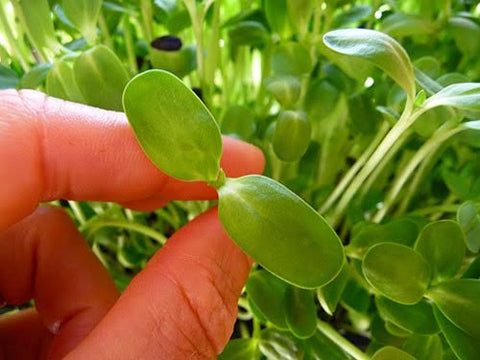
Sunflower sprouts are rich in chlorophyll, natural vitamins, easily digestible trace elements, and enzymes. These seeds contain a lot of vitamin D, which strengthens the nervous system, helps maintain good vision, and improves skin condition.
Vitamin D and Lecithin
The International Sprout Growers Association (USA) states that sunflower sprouts are rich in vitamin D, making them very beneficial for the eyes. They are especially recommended for those with myopia. In addition, these sprouts calm the nerves and normalize the acid-base balance in the digestive tract, and normalize blood pressure.
The Harvard School of Public Health found that sunflower sprouts are a source of lecithin. This phospholipid is responsible for fat metabolism in the blood.
Fatty Acids and Proteins
M. Morton, a researcher from Sapienza University (Romania), found that sunflower sprouts are rich in Alpha-linolenic acid, known as Omega-3 fatty acid. Scientists at the University of Maryland Medical Center found that sunflower sprouts contain twice as much protein as spinach, iceberg, or romaine lettuce.
Sprouting itself is an excellent way to easily and naturally grow healthy greens at home. We especially recommend sprouting during the cold season, when your own garden beds are empty, and you can no longer find green goodies at the farmers' market... :)
Phase I – Soaking
Soak unshelled (unroasted) seeds in water for 10-12 hours.
Phase II – Germination
After 10-12 hours, drain the water, rinse the seeds with clean water, and germinate them for about 28-36 hours (until small sprouts, "tails," appear). During germination, rinse the seeds several times with running water.
Phase III – Soil Preparation, Planting
Depending on the chosen tray, pour soil (peat is most suitable, 10% compost soil, 5% humus (worm castings); the chosen soil should not contain animal feces, which promote nitrate accumulation) in a layer approximately 2-5 cm thick. Compress the soil firmly. Then, spread the seeds densely over the soil surface in a continuous layer, water them.

Phase IV – Pressing
If you have planted several trays of sunflowers, stack them one on top of the other. You can stack 3-5 trays. Place a weight (bricks, books, etc.) of up to 20-25 kg on top. Keep them pressed for 3-4 days. Check daily for sufficient moisture.
Pressing is necessary for the seed roots to establish well in the soil and retain moisture. This makes the plant stronger, juicier, and helps it shed its hulls faster.

Phase V – Final Stage
After 3-4 days, remove the weight and place the trays with sunflowers on a windowsill or in another bright location. In winter, when there is little natural light, you can use daylight growing lamps "Flora" or others (light spectrum ~6400 K). Water regularly.

Sunflowers can be eaten when they reach 5-10 cm in height. They can be added to salads, juiced, or used as greens for blending into green smoothies. Stored in a cellophane bag, they can be kept in the refrigerator for up to 7-10 days.
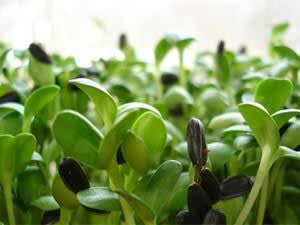
Delicious sunflowers
This article is not the author's personal opinion and is not intended to promote food supplements. It provides general information that is not related to the purchase or consumption of specific products. If you have health problems, are taking medication or other supplements, consult your doctor or pharmacist before starting new supplements. Health decisions should be made based on your individual condition and, if necessary, in consultation with a healthcare professional. If you have any comments or questions about the content on this page, please contact us by email at studija@grasole.com.


